Showing posts with label Castles. Show all posts

Tuesday, October 15, 2013

Vampires, Imagined and Historical

Much of the modern lore of vampires originates from a place called Transylvania, in part, due to the literary influence of Bram Stoker's original masterpiece, Dracula.  While many people know that, fewer know exactly where this is, and the history surrounding it.

Transylvania is located in what is now Romania, just to the west of the Black Sea in Eastern Europe.  The earliest mention of it as a political entity was in the 11th century, when it was a province under the Kingdom of Hungary.  It has also been a part of the Ottoman Empire, the Habsburg Monarchy, and the Kingdom of Romania.

The region of Transylvania is a temperate plateau, bordered on several sides by the Carpathian Mountains, and most well known for farmlands and castles, many of which have been the inspiration for literary works such as Dracula.  In German and a number of Eastern European languages, the region's name translates to English as "seven cities" or "seven fortresses," a tribute to the colonization of the area by Saxons in the 12th century.

The Hunyad Castle, Transylvania, Romania, © Wikipedia user Koponya25

While Bram Stoker's novel has influenced much of the English-speaking world's view of Transylvania, stories from the region itself influenced Stoker to write it in the first place.  A Hungarian writer friend of Stoker's, Arminius Vámbéry, is said to have shared with him much of the Eastern European folklore, legends, and mythology that formed the basis for the original manuscript of Dracula.

The name Dracula comes from the historical figure Vlad III, Voivode of Wallachia.  His actual name was Wladislaus Dragwlya, of the House of "Drăculești," or translated, Vlad III Dracula.  He was the son of Vlad II Dracul, the patronymic whence the name Dracula originated.

Dubbed "Vlad the Impaler" after his death in late 1476 or early 1477, he was both hero and villain, depending on source of the tales about him.  In Romania, he was revered for his protection and defense of the country; to his enemies, he was a terrifying conqueror known for torturing and executing those he defeated in the cruelest of ways.

Vlad Ţepeş, the Impaler, Prince of Wallachia, anonymous, 16th Century, Public Domain

Folklore involving the dead is quite common, and is the source of much of the vampire lore of today.  One tale that may have been related to Stoker by his friend Arminius Vámbéry is the tale of Petar Blagojević, an 18th century peasant from the town of Kisilova (now Kiseljevo), in northeastern Serbia.  Petar died in 1725.  His death was followed shortly by the deaths of a number of other villagers, each who died rather quickly after short, mysterious illnesses.  A large number of people died in the village the year Petar died, including over thirty children.  The survivors traced these deaths directly back to Petar as those who died claimed on their deathbeds to have been visited by him.

Most of the residents in the tiny village don't care to relate the tale.  To them, it's a stigma on the town that drives others away.  But some talk, if asked nicely enough.  As the story goes, the night it all started was dark and ominous, heavy with fog.  Nine people died in a span of just eight days, each claiming on his deathbed to have been visited by Petar, who had been the first to die.  Before they died, each victim said that Petar had come to their beds and had choked them during the night.  Petar's wife also claimed he had visited her in a dream, asking for shoes.  Other accounts say that Petar's son was brutally murdered after refusing to give him food when he came back to visit.  The mysterious deaths continued.

Village authorities finally ordered Petar exhumed, a full two months after his death.  He was allegedly found in the opened grave, still partially alive.  He had not rotted as a corpse should have; he was still lifelike, his lips still with fresh blood in them.  The villagers were so frightened by this that they demanded action be taken, even against the wishes of the local Austrian official.  They pulled Petar from the grave, stabbed his heart with a sharpened stick, and then for good measure, burned his body at the stake.

After Petar's death and the successive deaths of many more in the village, rumors of what was happening there spread to officials in the local Austrian government in Beograd.  Frombald, the Imperial Austrian head of the locality released a report to the Viennese newspaper, documenting the first recorded instance of vampires in Europe.  And at the request of Frombald, the Austrian military government dispatched a consignment of men to determine whether there were real vampires there, and if so, to determine if it signified the start of a vampire epidemic.

Ultimately, the Austrian commission could not make a determination, but that didn't stop the spread of rumors and tales of spreading, nor did it stop people from taking preventive measures against an outbreak of vampires, real or imagined.  Other such stories exist of vampires in the area at that time.  In each, the bodies of the dead were said to have looked alive, with fresh blood, and newly grown fingernails and hair.  A rash of such incidents of "vampire eradication" spread, where the newly dead were exhumed from their graves, staked in the heart, and burned.

Even today, the legend remains in the village.  Many of the younger generation are leaving, whether because of the tales or just to find work elsewhere, it's hard to say.  But the village is dying.  Few but the oldest denizens are left.  They remain, as does Petar Blagojević, who is still said to haunt the area.  A curse has even originated from the village: "Dabogda te Pera posetio!" - "May Peter visit you!"

The Premature Burial, by Antoine Wiertz, Public Domain

But is there scientific evidence vampires existed?  Maybe.  A while back in Poland, archaeologists found "vampire graves" on a construction site.  The remains buried there were decapitated, and their heads placed on their legs to ensure they stayed dead.  This finding is in line with the older, broader definition of vampires from the Middle Ages, but as with the story of Petar Blagojević, we find little in the way of empirical data.

In the field of medicine, there are a couple of interesting maladies that share symptoms with the more common legends of vampires.  Porphyria is one such malady, a genetic disorder that causes blisters, itching, and swelling of the skin when exposed to sunlight.  Other medical conditions which might lend themselves to such legends are catalepsy and catatonia, which cause states of unresponsiveness, something that without adequate medical training or facilities available could be mistaken for death.  Again, nothing that would indicate evidence of actual vampirism, but possible evidence explaining the root causes of such tales and superstitions.

The Vampire, by Philip Burne-Jones, 1897, Public Domain

So while there is no solid evidence supporting vampirism, the folklore remains.  The story of Peter Blagojević and others like it are quite common, and aren't confined to lore from Eastern Europe or the Balkans.  Vampire stories are rife throughout Western Europe, the Americas, and the rest of the world.  In fact, there are versions of the vampire found in almost every culture on Earth.

As with many such legends, most can be traced back to old wives' tales which attempt to put the inexplicable into terms which could be coped with, as strange as such terms may sound now.  Many of the signs of life as reported in these vampire tales can be explained by modern medicine as the signs of rigor mortis, or other common effects of death in a body.

But just as importantly, all such legends aren't likely to be completely disproved, leaving room for that one minute sliver of doubt in the mind, that one single thought in the back of the subconscious that allows us, every great once in a while, to believe they are true.

Quick note: several of the links in this post are in Serbian-Croatian, which is fine if you can understand them.  For those who can't, I suggest dropping the Internet addresses for them into Google and clicking on the "Translate this page" link.  It'll provide a rather shitty auto-translation that should get the job done for you.

Tuesday, December 13, 2011

Movie Review: Ladyhawke

It's one of the best cheesy fantasy films ever made.  It helped propel Matthew Broderick into the spotlight.  It was one of Rutger Hauer's few really good roles.  It starred a young and very beautiful Michelle Pfeiffer.  You've probably all seen the movie, and if you haven't, for shame.  Go see it now.  I'll wait.


Now that you've seen it, I really don't have to talk about the plot.  It's a pretty basic one anyway.  Get back to the castle in time to break the curse and end all that "hawk by day, wolf by night" nonsense that's keeping the lonely couple apart.    And while there are a lot of twists and turns along the way, you probably knew how it would turn out in the end.  Highlight the hidden text below if you want to find out what happens.  Spoiler alert:

They live happily ever after.

The real beauty of the film, besides Michelle Pfeiffer of course, was the cinematography - the setting and scenes of giant castles and quaint medieval towns.  Much of it was filmed in Italy, using the castles and picturesque towns of Rocca Calascio, Castell'Arquato, and Torrechiara.


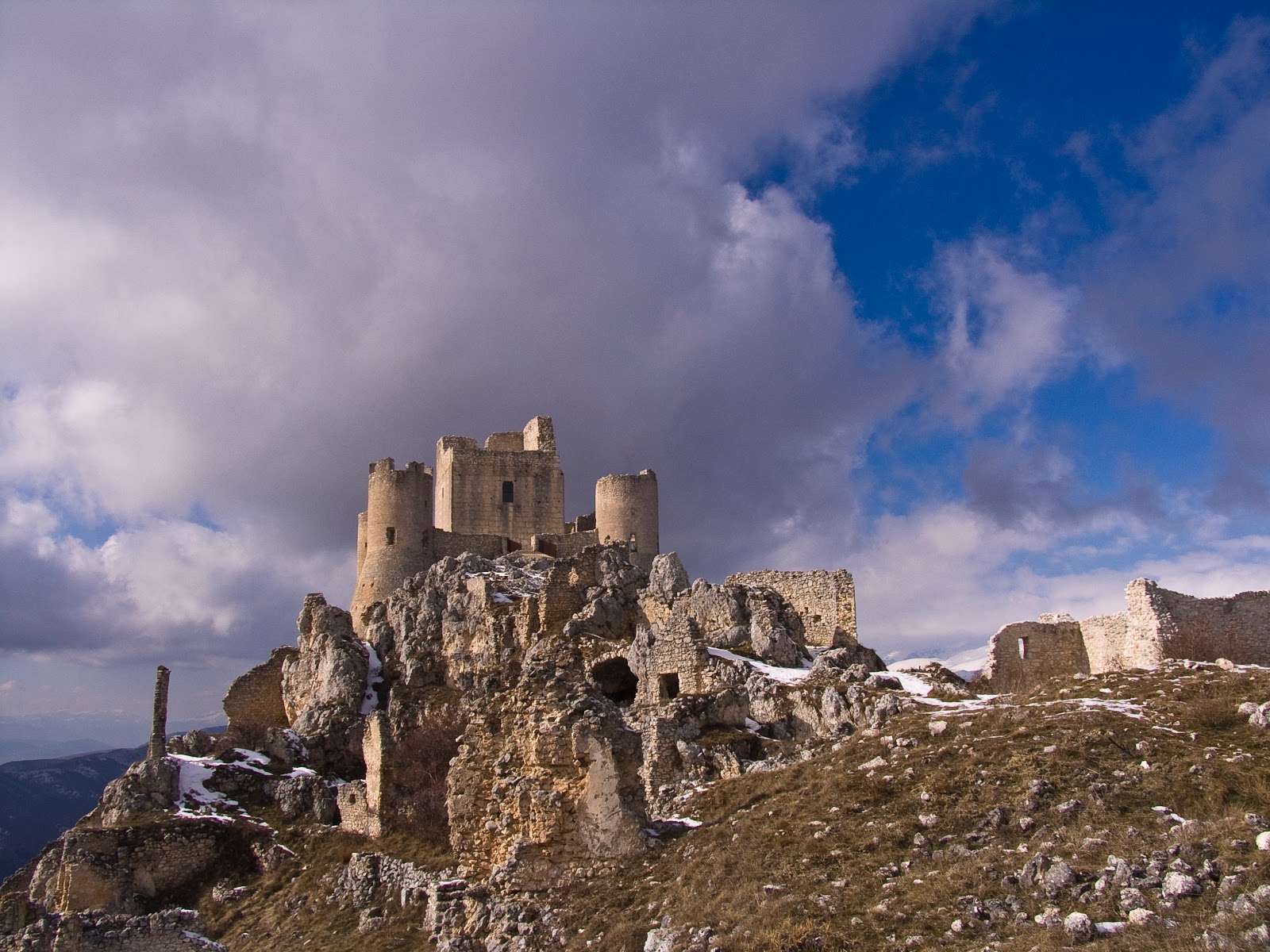
Rocca Calascio, © Aurelio Candido

Rocca Calascio is a mountaintop fortress (lit. Rock, in Italian), in L'Aquila Province, Abruzzo, Italy.  At 4,790 feet above sea level, it's the highest fortress in the Apennine Mountains, and overlooks the Plain of Campo Imperatore in the Navelli Valley below.


Rocca Calascio, © Federi

It was built as a watchtower to accommodate a military garrison sometime around the 10th century, and was expanded over a period of time, especially in the 14th and 16th centuries.  It was never challenged in siege or battle, but was badly damaged in a powerful earthquake in the year 1461.  The movie distinctly shows how impenetrable it most likely was, with its high walls and inaccessible surrounding terrain.


Castell'Arquato, © Andrea Lodi

Rocca Viscontea di Castell'Arquato is a castle by the tiny town of Castell'Arquato in the hilly Emilia Romagna region of northern Italy.


Castell'Arquato, © Sergio & Babriella Trentanni

It's one of the best preserved castles in Italy, with picturesque views overlooking the town and surrounding countryside.  Much of the town dates back to the 13th century, allowing a distinct look into the history of the region.


Torrechiara, © Hellis Reverberi

Built in the mid-15th century, Torrechiara was the main castle "Aquila" featured in the movie, and is located in the province of Parma in Northern Italy.  Sitting high above the Parma river valley, it has remained almost unchanged since it was first built, a bold and formidable castle, a truly great setting for the final showdown with the Bishop of Aquila.


Torrechiara, © Luigi Alighieri

All in all, the movie is highly entertaining.  In part because of the actors and the plot, but also because of the magnificent scenery throughout.  It feels more like a fairy tale, an old story told around the campfire of some medieval band of merry adventurers.  So next time you watch it, take in the scenery and the footage of the beautiful Italian castles and towns.  Pay attention to the architecture and grand panoramic shots.  After all, you already know how it's going to end.

Friday, September 23, 2011

High Fantasy!

It's still one of the most popular story forms in the fantasy genre, and probably the most well known of any.  When one hears "fantasy" with regards to fiction, thoughts of castles, wizards, great warriors, elven forests and dwarven mines immediately come to mind.  One almost can't think of such fiction without immediate comparisons to the Lord of the Rings, either movies or books.

And why not?  J.R.R. Tolkien completely reinvented the genre with the book The Hobbit, forever changing the lives of generations of fantasy nerds, including you and me.  His writing led directly to a resurgence of the genre.  He's the ultimate authority on all things high fantasy.  He's been copied and mimicked by countless authors, from the most amateur writers of fan fiction to renowned bestselling authors.  He's influenced them all, and with good reason.

In Hobbiton, © Tara Hunt

But what made him successful in the first place?  What made his works break out with such distinction?  He certainly wasn't the first to write novels in the genre.  We have numerous examples of castles and knights throughout medieval history.  Countless tales of dragons and assorted monsters have survived from the earliest works of history, including Beowulf and even the Bible.  Rumors of those able to perform magic, witchery, sorcery or any other "dark arts" are equally as old.


Angry Dragon, © Jonathan Dalar

I think it's hard to say just what made Tolkien's works so great, except for the fact that everything was right.  The characters were varied, interesting, and believable.  The setting was wonderful, from the green, rolling hills of the Shire to the eerie muck of the Mordor swamps.  His childhood, schooling, and service in World War I certainly contributed to his writing.  He was first and foremost a linguist, which would have immensely broadened his writing palate.  And he published in a time when the world seemed desperate to escape into an alternate world of fantasy.

Since then, much of the fantasy published has been derivative, at least in some form or another.  And that's alright.  It helps define the genre and give it boundaries.  After all, what is high fantasy without those elves, dwarfs, goblins, and orcs?


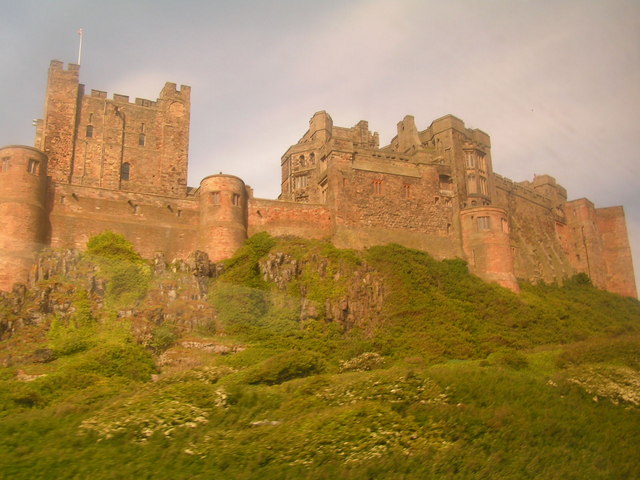
Bamburgh Castle, © Nigel Chadwick

We need certain elements to remain in fantasy, but what helped Tolkien's works stand out and endure was his creativity and imagination.  He went beyond what was established in fantasy at that time and made his own boundaries.  His creativity went beyond his peers and into new territory.


Wulfgar, Celtic Warrior © Jonathan Dalar

And that's what we need to see in fantasy today.  We need it to blend with other genres, creating a variety of new sub-genres.  We need authors to break the established molds and let their imagination separate from that which they grew up reading and spread into new territory.

We need heroes to fight dragons, but we also need them to fight other, as yet unnamed monstrosities.  We need fresh voices to spark new interest further into the unknown, as the early pioneers Tolkien, C.S. Lewis, William Morris and others did.

We've gotten that to some extent already.  J.K. Rowling did exactly that for young adult fantasy, blending the mundane world with the wonders of Hogwarts.  And even if some of us older and more cynical readers aren't completely enamored with her stories of a twelve year old boy's discovering his magic wand, we have to admit it was just the boost of energy the genre needed.


Jacobite Steam Train over the 21 Arch Viaduct near Glenfinnan, © Paul Ashwin

It isn't exactly high fantasy, but it's soundly within the fantasy genre.  And it works.  Rowling pushed the boundaries by not only creating an epic fantasy story appealing to generations, but also ventured into new territory in doing so.  Before, we had stories told of alternate fantasy worlds such as Tolkien's, David Eddings and others.  We had stories with portals that took us from our world into an alternate time or reality, such as in some of the works by Stephen R. Donaldson.  And now we have the world of Hogwarts, that blends and blurs the realities of the magical realm with our own.

It seems we see literary agents, editors and publishers clamoring on almost a daily basis for "the next Harry Potter".  Everyone is looking for the next big break-out in fantasy, particularly young adult fantasy.  It's a hot ticket at the moment, and rightly so.  After all, Harry Potter made a lot of people a whole lot of money.

It's only a matter of time.  It's probably out there already, being typed out on a laptop somewhere between college classes, or in stolen moments when the kids are asleep and the spouse is watching prime time television.  Maybe it's yours.  I'd say it's mine, but only if we were talking about science fiction.  Regardless, when we find it, the genre will be a little better for it.