Friday, October 7, 2011

An Egg from Space, or Something More Earthly?

Alien Egg, © Jonathan Dalar

There it is, folks.  In all its raw glory.  But what the hell is it?

I found it in my youth, circa 1980-1982.  It was lying on the surface of the ground in the middle of a wheat field in the heart of Eastern Washington's Palouse country.  It hadn't been unearthed.  It had no signs of being previously buried.  It was just sitting there on top of the dirt, so I took it home to find out what it was.


Wheat Fields in the Palouse, © Nikky Stephen

It's more or less egg-shaped, and consistent in material all around.  At five and a half inches long at its longest dimension, it tips the scales at somewhere over nine pounds.  The more interesting part is it's at least partially iron.  I'm guessing it's between 10% and 30% ferrous, which appears to vary some, depending on where you measure it.  It responds slightly to magnets, more so in certain areas of the surface than others.


Alien Egg, © Jonathan Dalar

I've dragged it around with me over the years, and have had a few interesting conversations over it.  A few folks thought it was a thunder egg, or geode.  At least initially.  They do until I point out the surface looks nothing like any geodes I've ever seen, and it does not feel hollow in the least.  It's too heavy.  It feels more like iron than a hollow stone.  One does not get the impression there are crystals on the inside, should it be cracked open.


Thunder Egg, © Joel Davis-Aldridge

The other thing often mentioned is a meteorite.  In spite of their relative rarity, it's easier to believe than a geode.  It's at least partially ferrous, which is a trait it holds in common with meteorites.  I haven't measured the exact percentage of iron it has, but the 10% to 30% common in meteorites isn't too far off.  You can feel the definite pull toward a magnet when you hold one to it, but it's weak enough they don't cling.


Meteorite, © Amgueddfa Cymru - National Museum Wales

It does not have any indication of rust, however, which is a trait commonly found in meteors.  After years of storage in various garages and back storage rooms, it would have certainly rusted by now if it's ever going to. In spite of the iron content it has, I doubt it ever will.


Holsinger Meteorite, © Samuel Hansen

It also does not have any true indication of pitting or thumbprints, also common in meteorites.  The surface is rough, and covered with small, shiny crystal faces.  They're flat and smooth, similar to those found with pyrite, or fool's gold.

Alien Egg, © Jonathan Dalar

It does, however share color and overall appearance with some types of meteorites, which makes the discussion a little more interesting.  The shape is also interesting.  While round rocks are not uncommon in nature, most have been shaped by water.  There is no evidence of such exposure to water with this rock.  It would be nice to find that it came from beyond our world.


2009 Leonid Meteor © Ed Sweeney

I'm still not sure what it is, and I'm not completely sold on any of the theories I've come up with over the years I've had it.  It's intriguing, if only for its feel and appearance.  It's probably just my overactive imagination, hard at work as usual, but there seems to be more to it than just a rock.  I'd like to think it's an alien egg, and that someday some sort of strange creature will emerge from it.  I'd like to think it's a chunk of some rare and distant metallic planet that somehow found its way to the fields behind my childhood backyard.  Maybe even from the same place as previous visitors to earth came from.

Easter Island © Stéphane Guisard

I haven't found out for sure what it is, primarily because of these fantasies.  Not knowing exactly what it is, however mundane that might be, keeps those wild and fanciful theories in the mix, even when I know they're not serious possibilities.

Someday my son and I will take it down to the University of Washington geology department, and see if we can't get someone there to take a look at it.  Someday we'll have a definitive answer.  We'll know exactly what it is and where it came from.  With that we'll rule out aliens, and probably even junk from outer space.  Until then, it's fun to think about the possibilities.

Friday, September 30, 2011

Horror at the Core of the Human Soul

October is upon us, which means we're staring down a full month of horror.  Great thing for us horror aficionados.  Ah, horror!  How you make my heart thud unnecessarily fast when I'm watching a movie or reading a book.  I know I'm personally not in danger, but that doesn't make me less squeamish or jumpy at all the right parts.


Amnityville, © Doug Kerr

But aside from the obvious - gore and blood and sudden violence - we think of when we're reminded of the genre, I'd like to delve into horrors of a different kind.  Those that really make you feel it in your gut, sometimes long after the fact.  And sometimes it even takes a while before the real horror of what you saw or read really sinks in.  That's the best kind of horror to me.

Right now, I'm reading HORNS, by Joe Hill, which is a great way to break in the month of October.  It's a fantastically disturbing horror novel, very well written, and in fact one of the best I've read in a long time.  But the disturbing parts aren't shock horror.  No, they're the inner workings of the minds of supporting characters, and they're disturbing because reading it, you feel it hits way too close to home for comfort.  After all, it would be more than a little shocking to discover what people actually thought about you, especially people you loved and trusted.  Downright awful when you find out just how little they think of you.


HORNS, © Joe Hill, used by permission.

I think most people would jump at the chance to be able to catch a glimpse of the minds of those around them, to see what they're really thinking about us no matter what they say.  But for every awesome thought we discover someone has about us, I'm afraid we'd find several hurtful and hate-filled ones.  Now maybe I'm just too much of a cynic, but humankind's seeming inability to keep their inner monologue of snark, angst, and downright nastiness from surfacing everywhere from real life to social media makes me think I'm not that far from the mark.  The novelty would soon wear off into the horror of what you've seen and the dread of what you know is still to come.

I've always enjoyed psychological horror over any other type.  When you get right down to it, it's much scarier than anything physical.  But to get it to really sink in, sometimes you gotta look it in the eye a little longer, stare it down and really let it get to you.  Let it affect you how it wants, not how you let it affect you.  Sometimes it takes you places you don't want to go, places you didn't know even existed within the human soul.

Isn't that what defines horror, after all?  Isn't it simply that which unpleasantly jolts the human psyche?  Blood and gore scratch the surface with a physical reaction, but psychological horror jolts the human soul.  It's easy to imagine a long list of that which horrifies us the most, but I'm betting at the top of that list are things that bare your soul to the public eye, that which lays back all the layers of protection and pares away the falsely modest confessions and admissions and really digs to the heart of the matter.  If there were no governor on the mechanism that allows us to open our souls to others, this world would be a dark place indeed.


The Death Penalty, © Truthout.org

It won't be completely bad, however.  That's where hope comes in.  Like Pandora's box, all things bad are countered by one small thing - hope.  You hope you're right.  You hope things will turn out alright.  You hope you haven't gone too far to take it all back.  Sometimes you have, but regardless of the depth of the situation, there's always hope.  Take away that and your recipe for true horror is complete.

Friday, September 23, 2011

High Fantasy!

It's still one of the most popular story forms in the fantasy genre, and probably the most well known of any.  When one hears "fantasy" with regards to fiction, thoughts of castles, wizards, great warriors, elven forests and dwarven mines immediately come to mind.  One almost can't think of such fiction without immediate comparisons to the Lord of the Rings, either movies or books.

And why not?  J.R.R. Tolkien completely reinvented the genre with the book The Hobbit, forever changing the lives of generations of fantasy nerds, including you and me.  His writing led directly to a resurgence of the genre.  He's the ultimate authority on all things high fantasy.  He's been copied and mimicked by countless authors, from the most amateur writers of fan fiction to renowned bestselling authors.  He's influenced them all, and with good reason.

In Hobbiton, © Tara Hunt

But what made him successful in the first place?  What made his works break out with such distinction?  He certainly wasn't the first to write novels in the genre.  We have numerous examples of castles and knights throughout medieval history.  Countless tales of dragons and assorted monsters have survived from the earliest works of history, including Beowulf and even the Bible.  Rumors of those able to perform magic, witchery, sorcery or any other "dark arts" are equally as old.


Angry Dragon, © Jonathan Dalar

I think it's hard to say just what made Tolkien's works so great, except for the fact that everything was right.  The characters were varied, interesting, and believable.  The setting was wonderful, from the green, rolling hills of the Shire to the eerie muck of the Mordor swamps.  His childhood, schooling, and service in World War I certainly contributed to his writing.  He was first and foremost a linguist, which would have immensely broadened his writing palate.  And he published in a time when the world seemed desperate to escape into an alternate world of fantasy.

Since then, much of the fantasy published has been derivative, at least in some form or another.  And that's alright.  It helps define the genre and give it boundaries.  After all, what is high fantasy without those elves, dwarfs, goblins, and orcs?


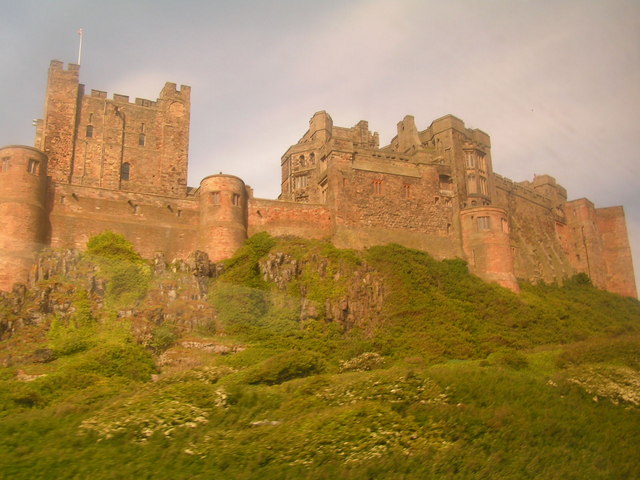
Bamburgh Castle, © Nigel Chadwick

We need certain elements to remain in fantasy, but what helped Tolkien's works stand out and endure was his creativity and imagination.  He went beyond what was established in fantasy at that time and made his own boundaries.  His creativity went beyond his peers and into new territory.


Wulfgar, Celtic Warrior © Jonathan Dalar

And that's what we need to see in fantasy today.  We need it to blend with other genres, creating a variety of new sub-genres.  We need authors to break the established molds and let their imagination separate from that which they grew up reading and spread into new territory.

We need heroes to fight dragons, but we also need them to fight other, as yet unnamed monstrosities.  We need fresh voices to spark new interest further into the unknown, as the early pioneers Tolkien, C.S. Lewis, William Morris and others did.

We've gotten that to some extent already.  J.K. Rowling did exactly that for young adult fantasy, blending the mundane world with the wonders of Hogwarts.  And even if some of us older and more cynical readers aren't completely enamored with her stories of a twelve year old boy's discovering his magic wand, we have to admit it was just the boost of energy the genre needed.


Jacobite Steam Train over the 21 Arch Viaduct near Glenfinnan, © Paul Ashwin

It isn't exactly high fantasy, but it's soundly within the fantasy genre.  And it works.  Rowling pushed the boundaries by not only creating an epic fantasy story appealing to generations, but also ventured into new territory in doing so.  Before, we had stories told of alternate fantasy worlds such as Tolkien's, David Eddings and others.  We had stories with portals that took us from our world into an alternate time or reality, such as in some of the works by Stephen R. Donaldson.  And now we have the world of Hogwarts, that blends and blurs the realities of the magical realm with our own.

It seems we see literary agents, editors and publishers clamoring on almost a daily basis for "the next Harry Potter".  Everyone is looking for the next big break-out in fantasy, particularly young adult fantasy.  It's a hot ticket at the moment, and rightly so.  After all, Harry Potter made a lot of people a whole lot of money.

It's only a matter of time.  It's probably out there already, being typed out on a laptop somewhere between college classes, or in stolen moments when the kids are asleep and the spouse is watching prime time television.  Maybe it's yours.  I'd say it's mine, but only if we were talking about science fiction.  Regardless, when we find it, the genre will be a little better for it.

Monday, September 19, 2011

To the Stars Again

Space has always been fascinating to us.  Long before technology allowed us to venture beyond the atmosphere, we've been fascinated with celestial objects.  Ancient cultures made gods out of them.  We've sacrificed our fellow humans to them.  They've affected daily life in numerous ways, from art to superstition to navigation to who knows what else.

I opined recently in a post on Curiosity Quills whether the decline in our space program would significantly alter the type of speculative fiction our children would read from that which we read.  I wondered whether the focus would shift from science fiction about outer space to more virtual reality, cyberspace-oriented science fiction.  It seems plausible, considering the end of the Space Shuttle program and the costs and logistics of a successful mission so a place even as relatively close as Mars.

But I wonder if I may have been a little premature in my pondering.  I've seen a number of interesting scientific discoveries lately that make me consider another alternative, and that is, we won't have to go out into space to continue our fascination with it.  Bringing it home via magnificent telescopes, video recording systems, and digital recreations of what only mathematics sees in space might just be the catalyst.


Hubble Catches Jupiter's Largest Moon Going to the 'Dark Side', © NASA Goddard Space Flight Center

Consider the new planet made of diamond that was recently discovered.  Or the Tatooine-like planet that revolves around two suns.  Or the fact the planet Pluto may have oceans hidden beneath it's surface.  All three of these discoveries have been in the news within the last month or so, and all are exciting new developments in space research.  Maybe we'll end up designating poor Pluto as a planet once again.


Crab Nebula, © NASA Goddard Space Flight Center

Technology grows in leaps and bounds, and that includes the tech that allows us to expand our reach into space without ever leaving the ground.  We're seeing more and more beautiful photos like these from NASA, allowing us the unique experience of space at a distance.


Hubble Finds Carbon Dioxide on an Extrasolar Planet, © NASA Goddard Space Flight Center

And while it would be überawesome to be an astronaut, and who hasn't dreamed of that as a child, the odds of a kid actually growing up to be an astronaut are well, astronomical.  Precious few actually get the chance to go up in space, unless of course you have large amounts of cash lying around without purpose and want to do it as a tourist.  That's where programs and projects like the Hubble come into play.  They allow that exploration without the travel.  They allow kids who won't have that chance to be actively engaged with the science of space exploration and research.


Hubble Supernova Bubble Resembles Holiday Ornament, © NASA Goddard Space Flight Center

We can see worlds far beyond our own, and even speculate whether they have life on them or even contain livable environments.  We might even be able to detect life on even the remotest of them someday soon.  That's a lot, considering we're looking at objects fifty kajillion light years away from being seen with the naked eye.

We're a curious species, and whether or not we continue or discontinue a program, our curiosity won't be easily sated.  We'll continue to wonder what's out there beyond the boundaries of our vision, and we'll continue to reach out to find it.


Dying Star Shrouded by a Blanket of Hailstones Forms the Bug Nebula, © NASA Goddard Space Flight Center

So who knows, maybe I speculated wrong in my earlier post.  In fact, I'm sure I did.  Not because the premise was necessarily wrong, but because I didn't take into consideration the other aspects of technology we are developing.  And while we will continue to break down the barriers of the cyberspace frontier, it won't come at the expense of abandoning outer space.


Most Earthlike Exoplanet Started out as Gas Giant, © NASA Goddard Space Flight Center

We may be decades or even a century or more from actual space travel to another celestial body besides the moon.  We may never get there as humans, but we aren't going to remain that stationary with the technology that allows us to view it from where we are.  And that's what's going to further drive space age science and the speculative fiction that derives from it.  As more and more of these exciting discoveries are made, our imaginations will remain fueled with thoughts of what's even further out.

Our kids may well see the same space-inspired fiction we grew up reading and watching, but because of the remote technology that allows us to see it from a distance, instead of manned space vehicles exploring the visible space around us.  Rather than shifting focus, this type of fiction will expand its focus.  We've already seen several new sub-genres appear in the last several decades or so, and we'll continue to see more.  Our kids won't abandon the types of speculative fiction we grew up with, they'll just add more to the mix, and that's a great thing.

Friday, September 16, 2011

Psychic and other Paranormal Phenomena

There have been huge numbers of psychic phenomena tallied throughout history.  Some are obvious fakes; some not so easy to disprove.  Of course, while predictions can be exposed as fakes by not coming true, it's a little more problematic if not impossible to prove them.  How many times does a prognosticator have to be right before it can reasonably be said they're actually foretelling the future?  What margin of error is acceptable?  I don't think anyone can even quantify this sort of thing, which is why we're no closer to understanding psychics and seers than we ever have been.


Nostradamus Statue, © Babak Farrokhi

Nostradamus (Michel de Nostredame, born either 14 or 21 December, 1503, died 2 July, 1566) was one of the first, and certainly more well known, prognosticators of the future.  He's been credited with predicting numerous events including the Great Fire of London, the political rise of Napoleon Bonaparte and Adolf Hitler, both world wars, the Apollo moon landings, the Space Shuttle Challenger disaster, and even the terror attacks of 9/11.

However, most academics say the majority of these prognostications of world events are the result of misinterpretations or sometimes deliberately inaccurate translations.  Many times the link between the events and the predictions is so weak, they hardly offer any proof of prognostication.  So, in spite of the cult status he's attained for predicting the future, we're still a long way from proving even the most famous seer ever had the ability.


Psychic Readings, © Adam Currell

Still, there is no lack of faith in the ability, or people who claim they have the ability.  Psychics are everywhere, and anecdotal experiences offering "proof" abound.  Much if this is fraud, or illogical leaps of faith due to cognitive bias.  Many times we as humans misinterpret correlation, and assign relationships based on what we want to believe instead of looking at things from a strictly objective standpoint.


Shadow Man Walking, © I K O via Flickr

Parapsychology research in some form or another has been around since 1889.  The term is used to include telepathy, precognition, clairvoyance, psychokinesis, near-death experiences, reincarnation, and apparitional experiences.


Fear, © I K O via Flickr

So what's my take on this?  Well, like many things, I'm decidedly undecided.  Neutral, one might say.  I think there may definitely be something to paranormal activity.  I say that with an ace card in the hole, as you'll see in an upcoming post.  We haven't produced any factual evidence proving any of it, however, which tempers my beliefs, but overall, I'd say there's at least something there.

I do know someone who seems to have some sort of precognitive aptitude.  She has correctly called a large, game changing play while watching football, whether from true ability or luck, who knows.  She's also been right on numerous other predictions, from the commonplace to downright astounding.  These, however, aren't what makes her predictions interesting.

They become a lot more interesting when observing her behavior before some of the more tragic, large-scale natural disasters we've seen in the world.  A number of times I've seen her jittery and worried, saying that something is terribly wrong, only to see a major earthquake or other natural disaster strike within days, or even the same day.  One of those times was Christmas Day, 2004.  She was horribly edgy, and said several times throughout the day that something was very wrong.  She paced the floor, irritable and worried the whole day, in spite of the fact it was Christmas.  "Something terrible is going to happen," she told me.  "I know it."  The next day we watched as tsunamis from an earthquake in the Indian Ocean crashed ashore, killing more than 230,000 people in fourteen countries.

Coincidence?  Quite possible.  It can't be proved, but on the other hand, it's certainly intriguing enough to make one pause for thought.  I'll share my own eerie experiences sometime in the future here, one of which is almost impossible for those involved to brush off as simply coincidence.  Stay tuned.  It's a wild one.

Until then, I'll leave it to you.  Any believers out there?  Any complete skeptics?  Let me know what you think.